M8 Connector Compliance with IEC and ISO Standards
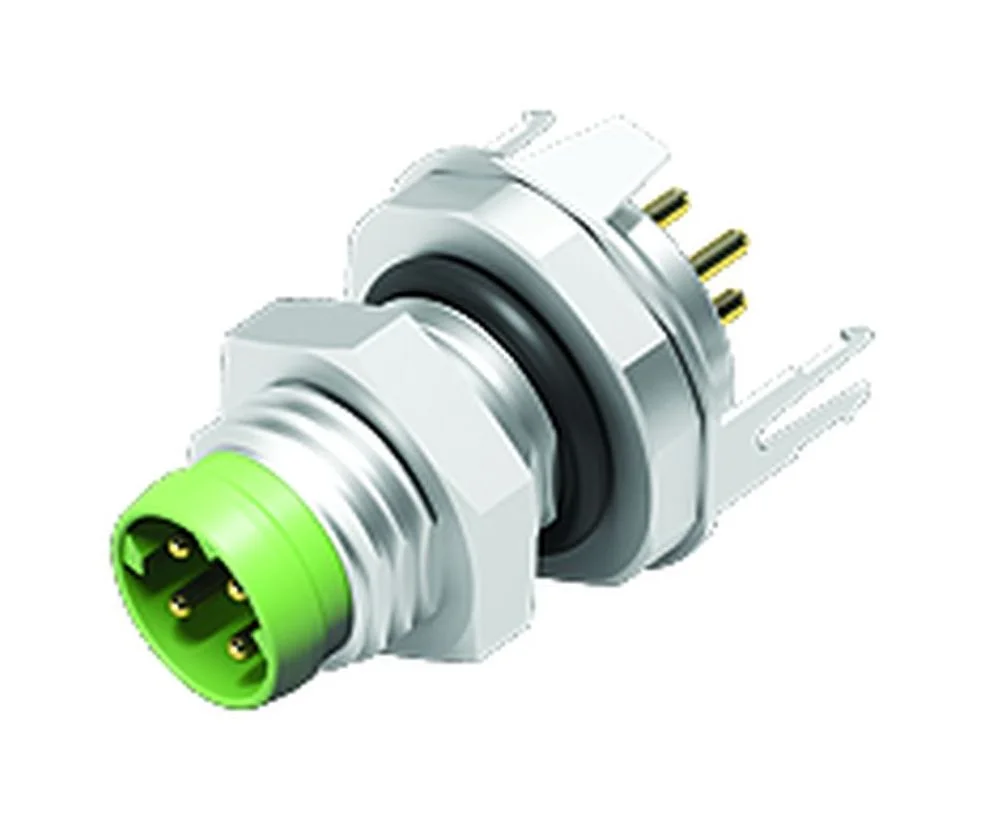
In industrial automation and control systems, compliance with international standards is essential to ensure safety, reliability, and interoperability. Connectors used in these environments must meet strict requirements for electrical performance, mechanical durability, and environmental protection. M8 connectors, widely used for sensors, actuators, and compact devices, are designed to comply with globally recognized IEC and ISO standards. This compliance allows them to be used confidently across industries and geographic regions.
Standards developed by the International Electrotechnical Commission (IEC) and the International Organization for Standardization (ISO) provide a common framework for connector design and testing. By following these standards, manufacturers ensure that M8 connectors deliver consistent performance, can be safely integrated into systems, and remain compatible with equipment from different suppliers.
Importance of Standards in Industrial Connectivity
Industrial environments demand high levels of consistency and reliability. Without standardized specifications, connectors from different manufacturers might vary in dimensions, pin assignments, or performance, leading to compatibility issues and system failures. IEC and ISO standards eliminate these risks by defining uniform requirements for design, materials, testing, and performance.
A compliant M8 Connector ensures that electrical connections meet international benchmarks for safety and functionality. This is particularly important in automated systems where downtime, signal errors, or electrical faults can result in significant operational and financial consequences. Standards-based connectors also simplify system design, installation, and maintenance by providing predictable behavior and performance.
IEC Standards Relevant to M8 Connectors
IEC standards play a central role in defining the technical requirements for M8 connectors. One of the most important standards is IEC 61076-2-104, which specifies the dimensions, mechanical characteristics, and electrical performance of M8 circular connectors. This standard ensures uniform thread size, contact layout, and mating compatibility.
IEC standards also address electrical ratings such as voltage, current, insulation resistance, and dielectric strength. By complying with these requirements, M8 connectors can be safely used in low-voltage industrial applications without risk of overheating, short circuits, or electrical breakdown.
In addition, IEC standards define testing procedures for durability, including mating cycles, vibration resistance, and mechanical shock. These tests confirm that connectors can withstand the physical stresses commonly found in industrial environments.
ISO Standards and Their Role
ISO standards complement IEC standards by focusing on quality, environmental resistance, and system-level integration. While ISO does not always define connector geometry directly, it establishes requirements for environmental testing, quality management, and application-specific performance.
For example, ISO standards related to ingress protection reference the IP rating system, which is widely applied to M8 connectors. These standards define how connectors are tested for resistance to dust and water, ensuring consistent protection levels across manufacturers.
ISO standards are also important in regulated industries such as automotive manufacturing, medical technology, and process automation. Compliance with ISO requirements helps ensure that M8 connectors meet industry-specific expectations for reliability and safety.
Coding and Pin Configuration Standardization
One of the most visible results of IEC compliance is the standardization of coding and pin configurations in M8 connectors. Coding types such as A-coded, B-coded, D-coded, and P-coded are clearly defined to prevent mismating between connectors intended for different functions.
IEC standards specify pin assignments, contact spacing, and keying features for each coding type. This ensures that connectors designed for sensors, data communication, or power delivery cannot be incorrectly connected, reducing the risk of equipment damage or safety hazards.
Standardized pin configurations also allow engineers to design systems with confidence, knowing that replacement parts and compatible components will be readily available.
Environmental and Mechanical Compliance
Compliance with IEC and ISO standards extends beyond electrical performance to include environmental and mechanical factors. M8 connectors are tested for resistance to temperature extremes, humidity, corrosion, and chemical exposure according to defined test methods.
Mechanical compliance includes requirements for thread strength, coupling torque, and resistance to vibration. These characteristics are especially important in applications involving moving machinery or outdoor installations, where connectors are subject to continuous mechanical stress.
By meeting these standards, M8 connectors maintain consistent performance over long service life, even in harsh conditions.
Benefits of Using Standards-Compliant M8 Connectors
Using M8 connectors that comply with IEC and ISO standards offers several advantages. Interoperability is one of the most significant benefits, as standardized connectors can be sourced from multiple suppliers without compatibility concerns. This reduces supply chain risk and increases flexibility in system design.
Standards compliance also simplifies certification and regulatory approval processes. Many industrial systems must meet safety and quality requirements before deployment, and using compliant components helps streamline these procedures.
Additionally, standardized testing and quality requirements lead to improved reliability and reduced maintenance, contributing to lower total cost of ownership.
Global Acceptance and Long-Term Reliability
IEC and ISO standards are recognized worldwide, making compliant M8 connectors suitable for global deployment. This is especially important for manufacturers that export equipment or operate facilities in multiple countries.
Long-term reliability is another key outcome of standards compliance. Rigorous testing and clearly defined specifications ensure that M8 connectors perform consistently throughout their service life, even as system demands evolve.
Conclusion
Compliance with IEC and ISO standards is fundamental to the performance, safety, and reliability of M8 connectors in industrial applications. These standards define everything from mechanical dimensions and electrical ratings to environmental protection and coding schemes. By using standards-compliant M8 connectors, engineers and manufacturers can achieve reliable interoperability, simplify system integration, and ensure long-term performance across a wide range of industrial environments.