
The Essential Guide to DevOps Consulting for UK Businesses in 2026
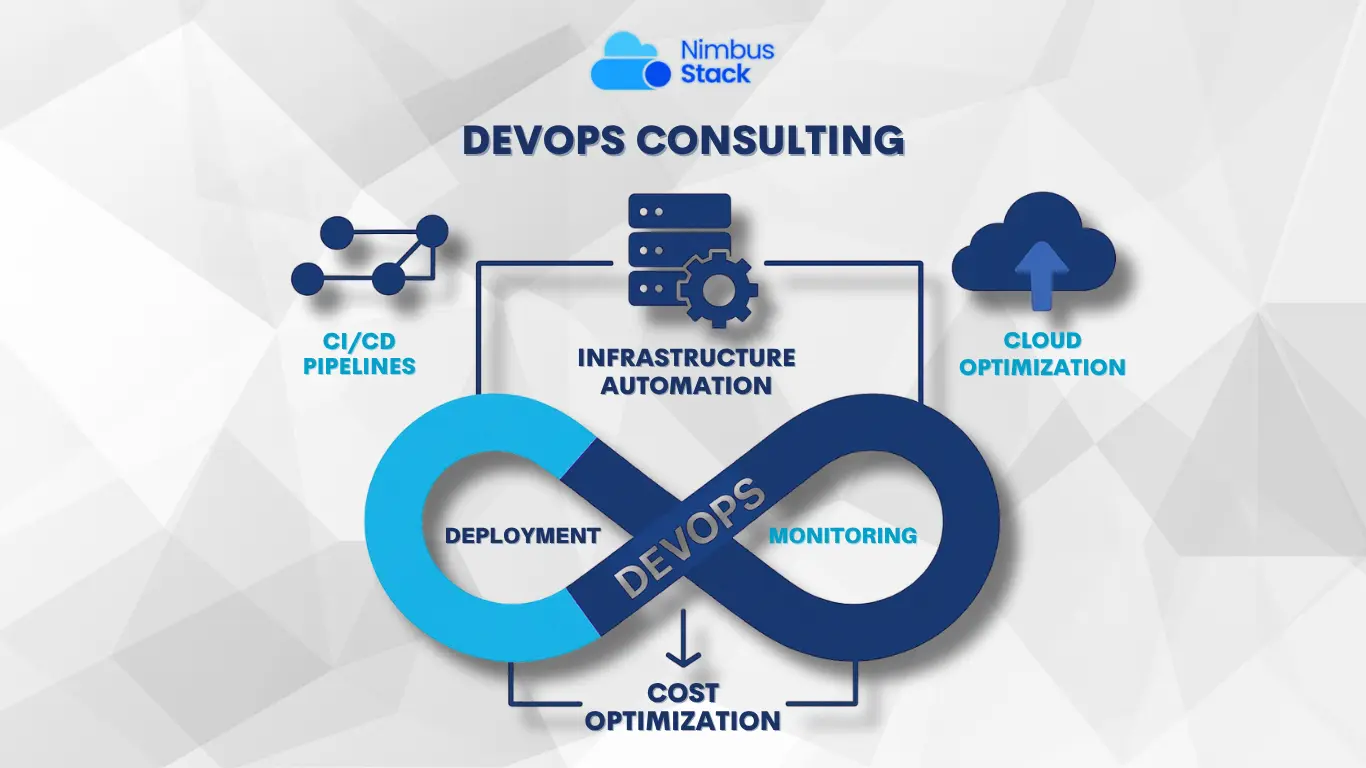
How often does your development team say “it works on my machine” while your operations team scrambles to fix a broken live environment? If that sounds familiar, you aren’t alone. It’s a frustration shared by Managing Directors from Bristol to Belfast.
Here’s the reality: In a market as competitive as the UK’s, speed is currency. If your competitors are deploying updates three times a day while you’re struggling to release once a month, you’re already losing ground. You’re likely reading this because your software delivery pipeline feels more like a clogged drain than a high-speed rail link.
But fixing this isn’t just about buying new tools or hiring more developers; it’s about fundamentally changing how your teams collaborate. In this guide, we’ll explore how expert guidance can bridge that gap, streamline your workflows, and ultimately save your bottom line from inefficient processes.
Understanding DevOps Consulting in the British Market
What exactly is a DevOps consultant? It’s tempting to think of them as just another techie who automates scripts. However, a true consultant is more like an architect for your digital factory floor. They look at the entire lifecycle of your software—from the first line of code written in a Shoreditch co-working space to the final deployment on a server in Slough—and find ways to make it faster, safer, and more reliable.
In the UK context, this role is critical. We operate in a unique environment where legacy systems (some dating back decades) often have to interface with cutting-edge cloud technology. A consultant doesn’t just come in and say, “Move everything to the cloud.” They analyse your specific constraints—whether that’s budget caps, existing personnel skills, or stringent industry regulations.
Take a typical UK high-street retailer expanding its e-commerce presence. They might have a solid development team, but every time they try to launch a sale, the site crashes. Why? Because the developers aren’t talking to the infrastructure team about load balancing. A DevOps consultant steps in here. They implement “Infrastructure as Code” (IaC), meaning the infrastructure settings are version-controlled just like the application code.
Why do UK businesses need this now? Frankly, because the old “throw it over the wall” mentality is expensive. The cost of downtime and failed releases is rising. If you want to keep up with agile startups or efficient global competitors, you need a pipeline that flows without friction.
Why UK Businesses Need This Now
Frankly, the old “throw it over the wall” mentality is expensive. With cyber threats escalating, security cannot be an afterthought. This is why “DevSecOps” has become the standard in 2026. By integrating security into the OS level—leveraging the enhanced TPM 2.0 and BitLocker features found when you upgrade with a Windows 11 Pro key—consultants can ensure that even the remote devices used by your engineers are as secure as your main production servers.
Key Benefits for UK Companies
So, why should a pragmatic Finance Director sign off on this investment? Let’s look at the hard numbers and strategic advantages.
1. Faster Time-to-Market
Speed kills the competition. I’ve seen companies reduce their release cycles from six weeks to six hours with the right guidance. When you automate testing and deployment, you remove the human bottlenecks. For a UK fintech firm launching a new feature to beat a competitor, those few weeks of advantage can mean capturing roughly 15% more market share early on.
2. Enhanced Stability and Reliability
It seems counterintuitive that moving faster makes you more stable, but it does. By releasing smaller updates more frequently, you reduce the risk of a catastrophic failure. If something does break, it’s easier to fix 10 lines of code than 10,000. Statistics suggest that high-performing DevOps organizations have a change failure rate that is 7 times lower than that of low performers. That means fewer 3 AM emergency calls for your IT manager.
3. Cultural Transformation
This is the hidden gem. DevOps isn’t just about tools; it’s about people. A consultant bridges the tribal divide between “Dev” and “Ops.” They foster a culture of shared responsibility. Instead of blaming each other when things go wrong, teams work together to fix the system.
Real-World Scenario: Consider a logistics company in the Midlands. They were losing contracts because their tracking portal was unreliable. After bringing in a consultant to implement automated monitoring and CI/CD pipelines (Continuous Integration/Continuous Deployment), their uptime improved to 99.99%. That reliability directly contributed to them securing a major contract with a national supermarket chain worth approximately £2.5m annually.
Implementation Challenges (And How to Beat Them)
Let’s be honest, transforming your IT operations isn’t a walk in the park. There are specific hurdles that UK businesses often face.
The Skills Gap
The UK is currently facing a significant digital skills shortage. Finding permanent staff who know Kubernetes, Docker, Terraform, and Azure inside out is incredibly difficult—and expensive. Salaries for senior DevOps engineers in London can easily exceed £90,000. This is why many turn to DevOps Consulting in the UK rather than hiring a full-time permanent team immediately. It bridges the gap while your internal staff upskills.
GDPR and Data Sovereignty
Since Brexit, the landscape of data compliance has shifted. You can’t just automate data flows without knowing where that data is landing. A US-centric tool might default to storing logs in Virginia, which could put you in breach of UK GDPR if those logs contain personal customer data. Consultants with local knowledge ensure that your automated pipelines respect data residency requirements, keeping your data safely within the UK or EU distinct zones where adequate protection is assured.
Legacy “Technical Debt”
Many established British firms run on older technology stacks. Trying to wrap modern DevOps practices around a monolithic mainframe application is like trying to put a turbocharger on a steam engine. It’s possible, but tricky. The challenge is “modernisation without paralysis.” You can’t stop the business from rewriting everything. Consultants help you adopt a “strangler fig” pattern—slowly replacing parts of the old system with modern microservices without taking the whole ship down.
Practical Implementation Guide: 7 Steps for UK Businesses
Ready to streamline your operations? Don’t just buy a tool license and hope for the best. Follow this pragmatic roadmap.
1. Assess Your Current Maturity
What: Audit your existing processes honestly.
Why: You can’t map a route if you don’t know where you’re starting.
How: Survey your teams. ask them: “How long does it take to get one line of code change into production?” If the answer is “3 weeks,” you have your baseline.
2. Define Business Goals, Not Just Tech Goals
What: Link DevOps to money or customer satisfaction.
Why: Tech for tech’s sake fails.
How: Set a goal like “Reduce customer onboarding time by 50%” rather than “Implement Kubernetes.”
3. Start Small (The “Pilot” Approach)
What: Pick one non-critical project to transform.
Why: Proving value early wins hearts and minds (and budget).
How: Choose an internal tool or a minor service. Apply automated testing and deployment to it. Show the board the results: “We deployed 40 times this month with zero errors.”
4. Prioritise Security (DevSecOps)
What: Integrate security from day one.
Why: Retrofitting security is costly and dangerous.
How: Automate security scans in your code pipeline. Ensure your consultant sets up automated vulnerability testing so bad code is rejected before it even reaches a test server.
5. Invest in Training
What: Upskill your existing team.
Why: Consultants eventually leave; your team remains.
How: Use the consultancy period as a learning opportunity. Pair your internal engineers with the consultants. Make knowledge transfer a KPI of the project.
6. Standardise Your Toolchain
What: Pick a set of tools and stick to them.
Why: “Tool sprawl” creates confusion and waste.
How: Decide on your stack (e.g., GitHub for code, Jenkins for CI, AWS for hosting). Don’t let every team pick different tools just because they feel like it.
7. Monitor Everything
What: Implement comprehensive observability.
Why: You need to know something is wrong before your customers do.
How: Set up dashboards that track not just server health (CPU usage), but business health (failed logins, checkout errors).
Real UK Success Story: The Fintech Turnaround
Let’s look at a realistic example: SterlingPay Solutions, a hypothetical payment processor based in Leeds.
The Challenge:
SterlingPay was struggling. Their monolithic application was unstable. Every time they updated the software to meet new banking regulations, the system would be down for approximately 4 hours. They were spending roughly £15,000 a month on overtime for engineers fixing issues on weekends, and customer trust was plummeting.
The Solution:
They engaged a specialist DevOps consultancy. The consultants didn’t rewrite the whole app. Instead, they containerised the application using Docker, allowing it to run consistently across development and production environments. They built an automated testing pipeline that caught 90% of bugs before they reached the live server.
The Results:
- Deployment Frequency: Went from once a month to twice a week.
- Cost Savings: Overtime costs dropped by nearly 85% as weekend deployments were no longer needed (updates happened automatically during low-traffic windows).
- Recovery Time: If a bug did slip through, the “rollback” time went from 4 hours to under 5 minutes.
The Managing Director noted that for the first time in two years, the tech team was innovating rather than firefighting.
FAQ Section
1. Is DevOps Consulting only for software companies?
Absolutely not. Any UK business that relies on software—whether that’s an online retailer, a logistics firm with a tracking portal, or a bank—benefits from DevOps. If you have servers and code, you have a pipeline that can be optimised.
2. How long does a typical DevOps transformation take?
It varies, but don’t expect an overnight fix. A meaningful transformation usually takes 6 to 18 months to fully embed. However, you should see initial “quick wins” (like automated deployments for smaller apps) within the first 6-8 weeks.
3. Will DevOps make my Ops team redundant?
No, it changes their job description. Instead of manually restarting servers and patching cables, they become “Site Reliability Engineers” (SREs). They focus on automating tasks and improving system architecture. It removes the boring, repetitive work, making their jobs more interesting and valuable.
Conclusion
Staying static is not an option. In a digital economy that runs 24/7, clinging to manual, outdated release processes is a surefire way to frustrate your staff and lose your customers.
DevOps isn’t magic; it’s engineering. It’s about applying discipline and automation to the chaotic process of software delivery. Whether you are looking to secure your data, speed up your release cycles, or simply stop the endless “blame game” between your departments, expert guidance is the catalyst you need.
Don’t let your infrastructure be the bottleneck that holds back your growth. Take the first step towards a leaner, faster, and more resilient business today. If you want to learn more about how this applies to your specific setup, the answers are out there.
Optimise your pipeline, empower your team, and watch your business accelerate.